Samantha Rosenthal MPH’10, Ph.D.’14 encourages men to prioritize their well-being and seek help when needed while working to break down the stigma surrounding men’s mental health.
Well before the COVID-19 pandemic struck, rising rates of depressive episodes and suicidal ideation had made the mental health of young adults an increasingly urgent public health issue. In 2022, 36.2% of people aged 18-25 experienced mental illness, the highest among all age groups. Nearly 12% faced serious mental illness.
As a life stage defined by evolving relationships and identities, young adulthood is inherently vulnerable. The added weight of digital dependence and sociopolitical unrest have only intensified mental health challenges in recent years.
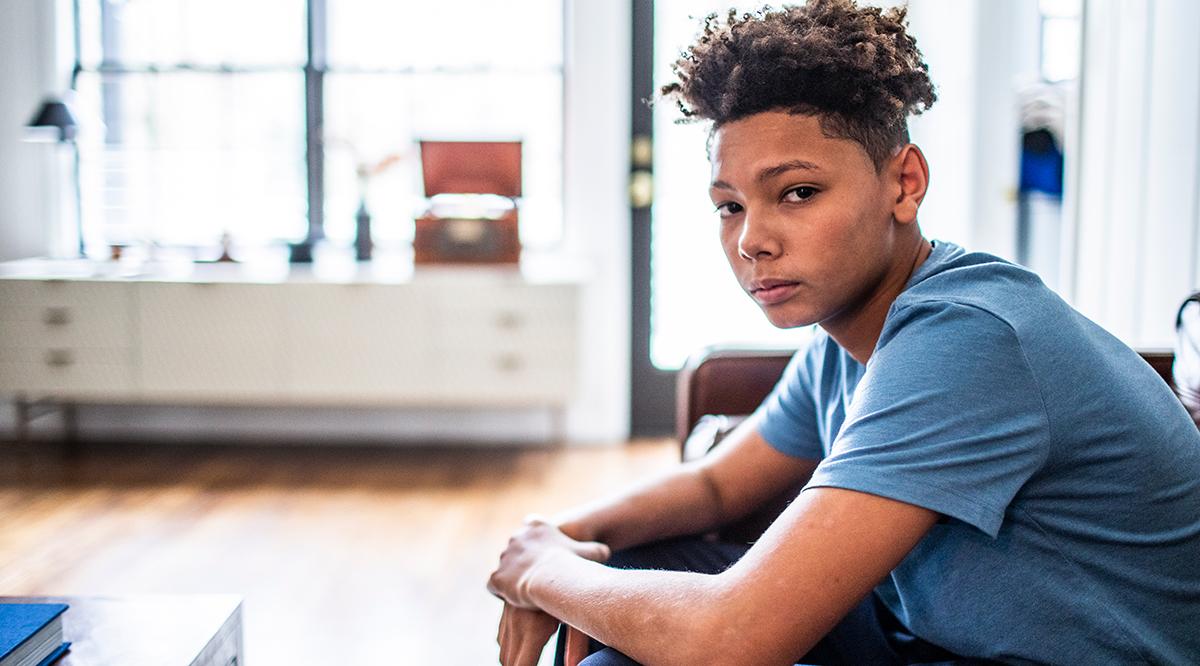
Young adult men, in particular, face a distinct and growing mental health crisis, driven by complex and often overlooked pressures.
Ask them, ‘You good man?’ and say it more than once because maybe it takes a few times for someone to feel safe enough to share more.
Enter Samantha Rosenthal MPH ’10, Ph.D. ’14, the primary author of the 2024 Rhode Island Young Adult Survey. She locates the source of young men’s distress in “restrictive masculinity norms,” which are deep-rooted cultural expectations that push young men to be tough, dominant, self-reliant and willing to take risks, while discouraging any show of sadness, fear or vulnerability. In trying to live up to these standards, many young men avoid seeking help or medical care, and instead turn to drugs and alcohol to cope.
Rosenthal, an alum of the Brown University School of Public Health’s MPH and doctoral programs, recently published an article in a special issue of the Rhode Island Medical Journal dedicated to young adult male health. The issue explores a range of concerns—depression, eating disorders, gun violence, gambling and pornography addiction—while centering the role of restrictive masculinity norms in these outcomes.
Rosenthal, who is a professor of health science at Johnson & Wales University, suggests that although these norms vary across race, culture and geography, they are widespread and deeply ingrained. So much so that theWorld Health Organization has identified harmful masculinity as a serious public health concern that discourages help-seeking and contributes to higher rates of violence, gender inequality and mental health struggles.
The consequences can be stark, she said. Men face elevated risks of heart disease and stroke. They have shorter lifespans than women. They are less likely to seek care for physical and mental health issues and more likely to skip routine checkups, waiting until problems become urgent or life-threatening.
Meanwhile, men who feel supported by restrictive masculinity norms are more likely to engage in reckless driving and unsafe sex, and are more likely to become addicted to gambling and pornography.
The Rhode Island Young Adult Survey of 2022, for example, showed that 13 to 17% of young men met the definition for pornography addiction, compared to less than 3% of females. People who are pornography-addicted have a much higher rate of suicide ideation.
“The most plausible explanation for this is that the types of pornography that are out there today set very unrealistic expectations of what sex looks like, especially for young men who are new to this experience,” Rosenthal said. “If they become sexually active and their experiences fail to meet those expectations, they feel like they’re falling short, that they’re not ‘man enough,’ which can lead to despair and thoughts of suicide.”
“ When we allow men the space to be whole people–messy, emotional and open—we create a healthier, more connected world for all of us ”
#James Donaldson notes: Welcome to the “next chapter” of my life… being a voice and an advocate for #mentalhealthawarenessandsuicideprevention, especially pertaining to our younger generation of students and student-athletes. Getting men to speak up and reach out for help and assistance is one of my passions. Us men need to not suffer in silence or drown our sorrows in alcohol, hang out at bars and strip joints, or get involved with drug use. Having gone through a recent bout of #depression and #suicidalthoughts myself, I realize now, that I can make a huge difference in the lives of so many by sharing my story, and by sharing various resources I come across as I work in this space.#http://bit.ly/JamesMentalHealthArticle Find out more about the work I do on my 501c3 non-profit foundation website www.yourgiftoflife.org Order your copy of James Donaldson’s latest book, #CelebratingYourGiftofLife: From The Verge of Suicide to a Life of Purpose and Joy
Similarly, gambling addiction affects roughly 12% of the young male population of Rhode Island (the issue doesn’t register statistically among young women) potentially causing financial harm and leading to feelings of shame and failure.
The pressure on men to provide in a financially insecure environment, to protect, to be invulnerable and self-reliant, takes a toll. Rosenthal points out that men account for about 75% of suicide deaths in the state, more than three times higher than women over the past decade.
“This highlights some of the pressures on men to suppress their emotions because that’s what society tells them—to rely solely on themselves to try to cope and deal with these issues,” she said. “Then they often isolate and it’s because there’s shame around having these feelings or feeling this bad, or not even feeling like they can build relationships where emotions can be shared.”
To help turn the tide on this crisis, Rosenthal advocates sending trusted, relatable figures into schools and colleges to discuss the dangers of gambling, pornography and substance use.
For family and friends of young men, she advises building connection and trust. “Ask them, ‘You good man?’ and say it more than once because maybe it takes a few times for someone to feel safe enough to share more,” she said. “Just normalizing conversations about mental health can be helpful, talking openly about therapy, stress, your own feelings, celebrating men who model vulnerability, and then just speaking up against harmful masculine norms.”
Ultimately, Rosenthal says, when we expand our definition of masculinity, of how we expect men to be, we increase wellness. “When we allow men the space to be whole people–messy, emotional and open—we create a healthier, more connected world for all of us,” she said.