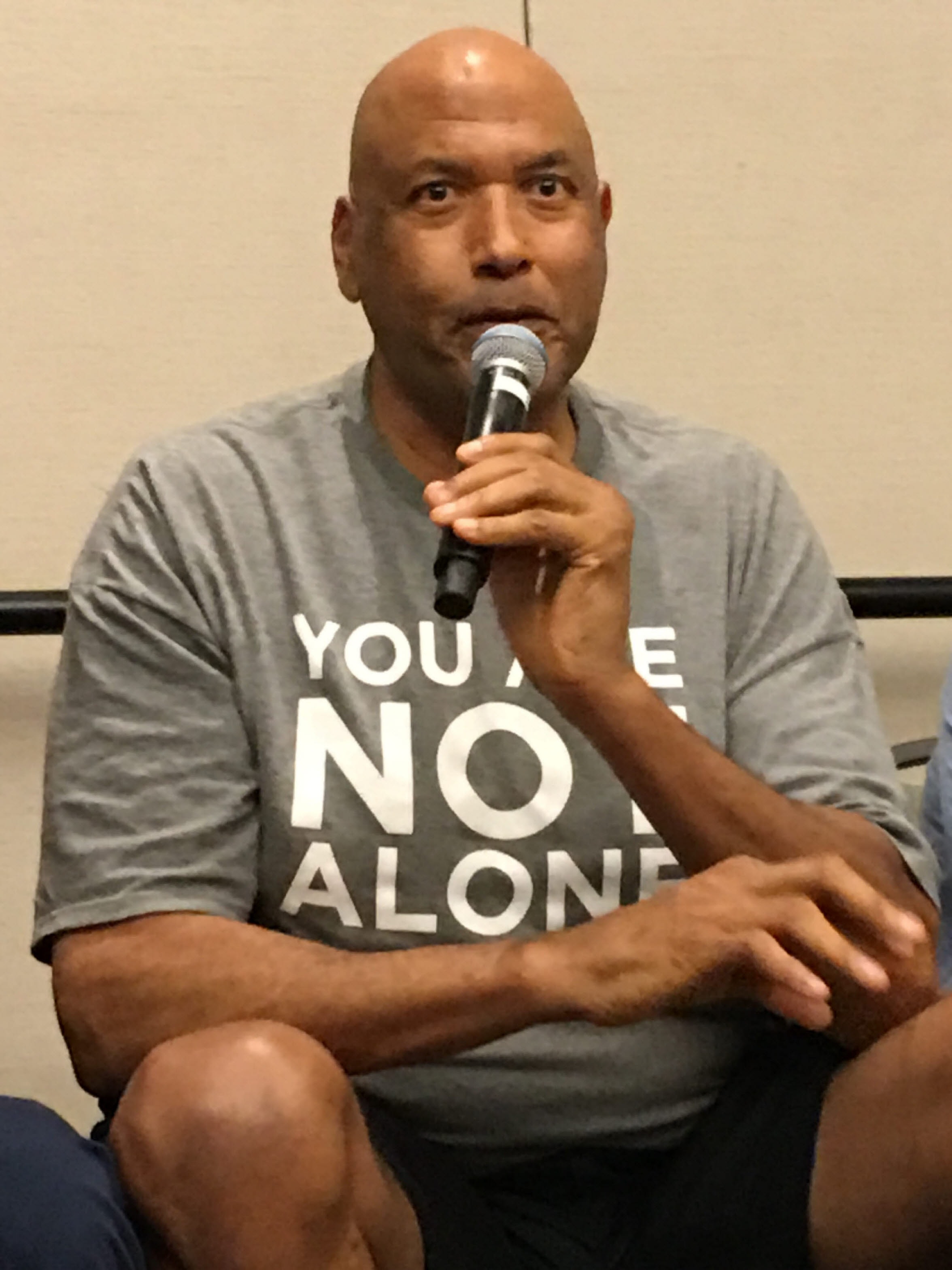
James Donaldson on Mental Health – Opinion: How to help those experiencing suicidal thoughts

Statistically, suicide rates are significantly higher among men than women

by Julie Higgins

OPINION|

Recently, our community in Springfield lost a dynamic leader to suicide. Although I didn’t know him personally, I’ve heard countless stories about the profound impact he had on those around him. Despite being surrounded by supportive friends, family, and colleagues, he saw suicide as his only solution. This heartbreaking loss reminds us that suicide can affect anyone, regardless of outward success or strong support networks. 

Statistically, suicide rates are significantly higher among men than women. In the United States, men die by suicide at a rate approximately four times higher than women, accounting for about 80% of all suicide deaths.

Hannah Ritchie from Our World Data explains in her article, “The exact reasons for this gender gap are still debated. Factors could include the lethality of different methods, stigma around seeking help, different social pressures, and alcohol and drug abuse.”

In my own life, I’ve personally known three men who died of suicide. All were respected influencers in Springfield, one a business owner, another a veteran, and the third a corporate leader. Each had loving families, surrounded by supportive friends, children, and in some cases, grandchildren. I never imagined any of these three men would have chosen this path. How could these tragedies, and the most recent one, have been prevented? Where there’s no simple answer, this article aims to spark open, caring conversations among friends, family, and especially men, to break the silence around mental health and more directly, suicide.  

Although women are twice as likely to experience depression, they are more inclined to seek help from others or counseling when overwhelming thoughts haunt them. In contrast, depression in men tends to be underreported as societal expectations can lead men to minimize mental health issues and view counseling for the weaker man who can’t handle their problems like a man should. The shame of not “having it together” and even uttering the words of defeat plant thoughts that cycle out of control and perhaps lead to a tragic path of suicide. While women experience suicidal thoughts or attempts, men complete suicide at a much high rate due to these barriers.

#James Donaldson notes:
Welcome to the “next chapter” of my life… being a voice and an advocate for #mentalhealthawarenessandsuicideprevention, especially pertaining to our younger generation of students and student-athletes.
Getting men to speak up and reach out for help and assistance is one of my passions. Us men need to not suffer in silence or drown our sorrows in alcohol, hang out at bars and strip joints, or get involved with drug use.
Having gone through a recent bout of #depression and #suicidalthoughts myself, I realize now, that I can make a huge difference in the lives of so many by sharing my story, and by sharing various resources I come across as I work in this space.
  #http://bit.ly/JamesMentalHealthArticle
Find out more about the work I do on my 501c3 non-profit foundation
website www.yourgiftoflife.org Order your copy of James Donaldson’s latest book,
#CelebratingYourGiftofLife: From The Verge of Suicide to a Life of Purpose and Joy

Click Here For More Information About James Donaldson

To help someone in crisis, the JED Foundation provides a practical, step-by-step guide when reaching out to a friend you are worried about: 

  1. Choose the right time and place to maximize privacy with minimal interruptions.
  2. Ensure concern and offer help by expressing your concern and desire to help, support them through their journey of seeking help.
  3. Ask them directly if they have thought about suicide. It’s tough using the word suicide, but research shows using the word can bring relief because someone finally acknowledges how bad they are feeling. 
  4. Keep the door open if they won’t talk to you. Let them know you’re available 24/7.
  5. Stay calm if they say yes. Ask follow-up questions to figure out how you can help.
  6. Listen and validate their struggle. Avoid dismissive comments like, “But you’ve got so much going for you!” “What would I do without you?” “Think of what this would do to your X, Y, Z person.” Instead say things like: “What you’re feeling sounds really painful and difficult. I don’t have all the answers, but I am here to listen.” “I’m so glad you told me this. Let’s keep talking.” “I understand you are really struggling, and I am here to listen.” 
  7. Connect them with professional help. This is the most powerful thing you can do. Together seek help for them: counselor, pastor or therapist.
  8. Don’t promise to keep what they tell you a secret. If someone is thinking of suicide, they need professional support. In the short term, it may be upsetting for them but it could save a life. 
  9. Get immediate help if needed. Don’t leave them alone. Stay with them until they are connected with help. There are many local organizations that are available or simply drive them to the emergency room. 
  10. Take care of yourself. Supporting someone in crisis can be emotionally draining and overwhelming. 

In Springfield, several resources are available for those experiencing suicidal thoughts. For veterans, The Warrior’s Journey, offers  warrior-to-warrior conversations having facilitated over 15,000 connections. The Victim Center provides free counseling and immediate help for those in crisis.. Burrell Behavioral Health has a 24-hour hotline and a crisis team able to immediately assist. Many local churches have pastor care available and access to immediate resources. Nationally, the 988 Suicide and Crisis Lifeline is available 24/7 for anyone in emotional distress, simply dial 988 for confidential support. 

If you’re reading this article and you have a lump in your throat because you know, this is you: Suicide is not the answer to whatever you’re experiencing. Nothing you are going through, have done, or will face is bigger than the love that surrounds you. You are more than your pain, your mistakes or your struggles. The people who care about you, family, friends, neighbors, colleagues, see your worth and love you more than the weight of this moment. You were uniquely created for a purpose and are worth fighting for. Reach out to someone today.

Leave a Reply

Your email address will not be published. Required fields are marked *