“A suicide attempt changed my life for the better”
Trigger warning: this article discusses suicide
The exact wording of our conversation is blurry now, almost seventeen years (to the day) later, but I can still vividly remember the creeping flush of humiliation climbing up my neck, as I stood awkwardly in that corridor. It smelled of Lynx Africa, old wood and fried food, as Jane*, one of my new sixth form tutors, looked on at me unblinking – but not unkindly – and asked why I’d missed her class so soon into a fresh term. My brain still felt heavy and foggy, not quite reachable, but I knew with certainty that the embarrassment coursing through me was white-hot and easy to access.
My reply was something stuttered and along the lines of: “I did something stupid, I’m sorry. I took an overdose on Monday.”
Jane didn’t look overly phased, but just coolly asked me why. I stammered that I wasn’t sure and repeated that I felt stupid about it all. She suggested I borrow notes from someone else to catch up, wished me well, then continued walking down the corridor.
Suicide – and mental health as a whole – is a deeply a complex issue. Rarely will somebody reach the point that ending their life feels like the only option due to one specific cause. In my case, it was a multitude of things that had piled up to block out all sunlight. If I had to explain the crux of it: I have having long struggled with anxiety (and at times depression) and in that moment following some big life changes, I felt incredibly lonely, unstable and not in a position to ask for help.
At that time, an intense and unhealthy romantic relationship had just ended and my hometown felt suffocating. My brain was stuck on a loop of repeating torturous things to myself. All things that, looking back, I know could’ve been dealt with differently – I just didn’t necessarily have the tools to do so, or see that, at the time.
While that period of ill mental health for me, thankfully, now feels like lightyears away, the fact that my life could have been prematurely cut short at the age of sixteen still makes me shudder. And while a lot of it is fuzzy, one thing that still stings acutely when it comes to my failed suicide attempt is a feeling of embarrassment. There was a deep shame that hovered throughout it all and to be honest, sometimes still lingers.
Is that why the most recent statistics on suicide show despite all the awareness charities and individuals have worked hard to raise, there’s been a continued increase in the number of people ending their lives in England and Wales? Recent records say over 6,000 took their own life last year – the highest figure on record since 1999.
At one point on that dark night of my own attempt, in the early hours of the morning and after a lot of vomiting, I felt like I’d emerged from a fever dream and realized I urgently needed medical help. An instinct kicked in and I realized I didn’t want to die. I had made a mistake. And so, I phoned 999 and asked for an ambulance, but begged them to switch the sirens off. The thought of the neighbors being woken up by blue lights bouncing off of their windows and finding out what I’d done, or of having to wake my mum up to explain everything, seemed too much to handle. Too mortifying.
But, the operator told me they could only send an ambulance complete with the dancing lights and sirens switched on, otherwise it couldn’t be classed as an emergency – so instead I replied, “Okay, I’ll leave it then.” In that moment, something I’ve only realised retrospectively, I quite literally decided I would rather potentially die than have people know my mental health was in a bad place, or risk being labelled an attention seeker.
Hours on, I eventually did tell my mum what had happened and she drove us to A&E. Again, I found this all utterly mortifying (not least when I spewed bright green in the carpark). Ironically, my mum worked for the mental health sector of the NHS, so I then had to look her colleagues, holding clipboards, in the eye and answer questions about our family set up. Whether I was supported. About the life that I had just come close to losing. I also remember feeling bizarrely high during those conversations and detached, to the extent that when one bored-looking doctor asked how I was doing, I told him, “Great, I feel great!”. Oddly euphoric.
I was then referred for therapy and (again ironically) my lecturer Jane’s daughter ended up being my counsellor (see: suffocating small-ish town vibes… the treatment centre was also only a few roads away from my ex-boyfriend’s house and I was terrified of being seen going in or out of it).
Other close family members know what happened and the choice I made that night, but have never asked me about it, or checked in to see how my mental health is generally (which is fine, they’re not obligated to and maybe they have their own reasons for not wanting to) – but I find it interesting and possibly indicative of this sort of in-betweeny space we seem to be stuck in as a society today, when it comes to speaking openly. If I’d broken a leg, I’m pretty sure they’d have asked how it was healing up.
In some ways, we’ve all come so very far. Back in 2008, I would feel utterly sick at the thought of anyone knowing I was in therapy or that I’d tried to end my own life. I remember a few people slapping the ‘crazy ex-girlfriend’ label on me too, which was basically the social equivalent of having ‘nutter: avoid’ scribbled across your forehead in permanent marker. Yet now, saying you’re in therapy is seen by many as shorthand for ‘I’m invested in myself and self-care’. It’s almost on par with saying you go to the hairdressers or the dentist.
We’re much better and responsive to people discussing their experiences of anxiety, stress or burnout – which are all valid and important aspects of mental health, that we should normalise discussing – but when it comes to speaking about suicide or suicidal thoughts, there’s still a lot of stickiness and awkward silence surrounding it. But if there wasn’t, perhaps over 6,000 people every year wouldn’t take their own lives.
To be clear, I’m not saying those closest to me should be asking if I’m okay every single day or even that it’s right to expect that from them. I also firmly believe that it is my responsibility to care for my own mental health as best I can; that is nobody else’s job (bar perhaps your medical team’s, should you have one). But if the reason the silence prevails is sheer embarrassment or wanting to avoid an uncomfortable conversation, then that should no longer be acceptable. And it’s something we all have to push through.
#James Donaldson notes: Welcome to the “next chapter” of my life… being a voice and an advocate for #mentalhealthawarenessandsuicideprevention, especially pertaining to our younger generation of students and student-athletes. Getting men to speak up and reach out for help and assistance is one of my passions. Us men need to not suffer in silence or drown our sorrows in alcohol, hang out at bars and strip joints, or get involved with drug use. Having gone through a recent bout of #depression and #suicidalthoughts myself, I realize now, that I can make a huge difference in the lives of so many by sharing my story, and by sharing various resources I come across as I work in this space.#http://bit.ly/JamesMentalHealthArticle Find out more about the work I do on my 501c3 non-profit foundation website www.yourgiftoflife.org Order your copy of James Donaldson’s latest book, #CelebratingYourGiftofLife: From The Verge of Suicide to a Life of Purpose and Joy
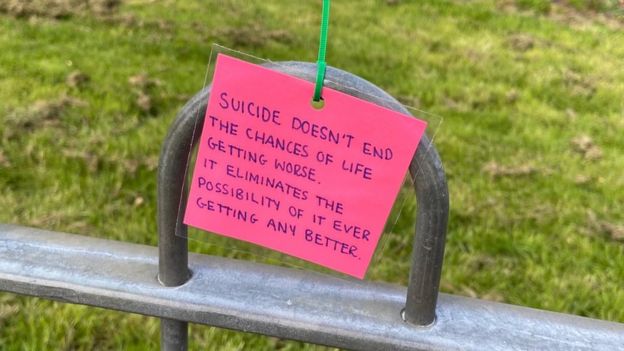
Now, it hurts my stomach to think about all the things I could have missed out on if that attempt to end my life had worked. It may sound cliché and it’s a refrain we’ve all seen bandied around a million times, but things do get better. They really do.
To caveat, I can’t lie and say I’ve never been anxious, down or had suicidal thoughts since that bleak time (I have; I’m currently back in therapy for my anxiety and a few years ago I remember Googling ‘what is the point of being alive’ and really not being able to come up with a single reason why, so devoid was my body of serotonin). But I also know now that I’d never act on those thoughts, because even when life feels shit and pointless, it’s actually still secretly brilliant. You just have to do your best to stay resilient until you can connect to that part of it again.
The odds of each of us being born, just as we are, are something staggering like one in 400 trillion. I’m not religious, but appreciate that that’s essentially miraculous, and I want to – just as we all deserve to – squeeze every last drop from this life. I am hungry for new experiences, to feel feelings, to set goals and chase them.
I’ve fallen in love again (and feel nothing about the former relationship I thought I’d never recover from), and have seen parts of the world I’d never even heard of the night I tried to tap out for good. I’ve built beautiful friendships and poured my everything into a career that brings me satisfaction and joy every single day. The future feels vast and full of options – because it is, for all of us. I even, after spending ten years away, now live back in the hometown I once so desperately hated. Once a place that used to make my throat feel like it was closing up, now it offers me a smaller community feel that I love. It’s just one example of how your perspective can change and grow if you only allow yourself the time.
Do. Not. Tap. Out. Early.
If you’re in a bad way right now and this all sounds like ‘live, laugh, love’ bullshit, that’s totally fair enough. When I was living in the depths of darkness, I’d probably have said the same, eye-rolled and then gone back to crying. But just think: if all you can do is get through the day hour by hour, or even minute by minute, do exactly that until you figure out what’s to come next. Reach out for help. Don’t let embarrassment, awkward silences or fear kill you, or take away your chance to inhale the good parts of life. They’re out there waiting for you, and you deserve them.
Sometimes hope is like the first shoot of spring that pokes its way through the dirt. You have to survive a long, tough winter to reach it (and it might arrive late), but even when it feels impossible to imagine seeing greenery again, please know it will come. Because no season or state of mind is permanent. The key word here is ‘survive’; do what you must to survive until you can live again. I’ve seen firsthand that it’s worth it.