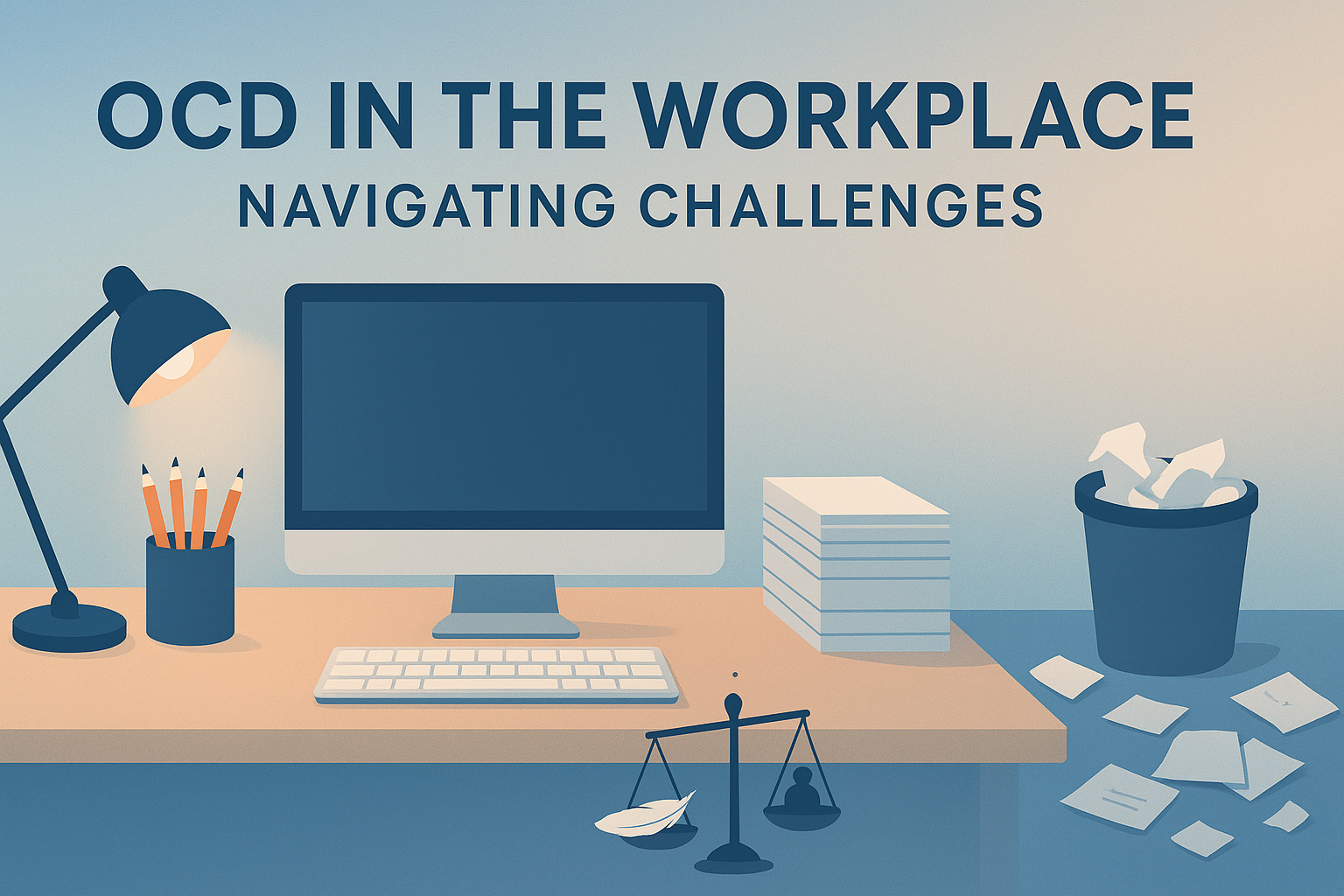
Obsessive-Compulsive Disorder (OCD) is a mental health condition characterized by intrusive thoughts and repetitive behaviors. In the workplace, this condition can present unique challenges that may impact performance and interpersonal relationships. This blog post aims to explore these challenges and offer strategies to navigate them effectively. Whether you or someone you know is dealing with OCD at work, understanding its implications can foster a more supportive and productive environment.
OCD is more than just a preference for cleanliness or orderliness. It involves persistent, unwanted thoughts (obsessions) and repetitive behaviors or mental acts (compulsions) that individuals feel driven to perform. These compulsions are often an attempt to reduce anxiety or prevent a feared event or situation, even if they are not logically connected to the event. Understanding the nature of OCD is the first step toward addressing its challenges in the workplace.
Recognizing OCD Symptoms in the Workplace
OCD symptoms can manifest in various ways in a work setting. Some common signs include:
Perfectionism: While striving for excellence is commendable, individuals with OCD may struggle with an overwhelming need for perfection, leading to procrastination or an inability to complete tasks.
Repeated Checking: This could involve checking emails multiple times for errors or constantly verifying if tasks have been completed correctly.
Orderliness: An uncontrollable urge to organize workspaces or files in a specific manner, which can be time-consuming and distracting.
Intrusive Thoughts: These can be distressing and may disrupt concentration and productivity. They often revolve around themes like contamination, harm, or symmetry.
Challenges Faced by Employees with OCD
Employees with OCD may encounter several challenges that affect their work life:
Time Management: Compulsions can take up significant time, making it difficult to meet deadlines.
Stress and Anxiety: The constant battle with intrusive thoughts and the need to perform compulsive behaviors can lead to increased stress and anxiety levels.
Interpersonal Relationships: OCD behaviors may be misunderstood by colleagues, potentially leading to social isolation or conflict.
Job Performance: The need for perfection and repetitive checking can impact productivity and overall job performance.
Strategies for Managing OCD at Work
Managing OCD in the workplace involves both personal strategies and organizational support:
Seeking Professional Help: Therapy, particularly Cognitive Behavioral Therapy (CBT), can be effective in managing OCD symptoms. Medication may also be an option under the guidance of a healthcare professional.
Time Management Techniques: Using tools like to-do lists and time-blocking can help in organizing tasks and minimizing the impact of compulsions on productivity.
Mindfulness and Relaxation Techniques: Practices such as meditation and deep breathing can help reduce stress and improve focus.
Open Communication: Discussing the condition with a trusted supervisor or HR representative can lead to accommodations, such as flexible work hours or modified tasks.
Creating a Supportive Environment
Employers and colleagues play a crucial role in supporting employees with OCD:
Promote Awareness: Educating staff about OCD can reduce stigma and foster understanding.
Encourage Inclusivity: Create an inclusive environment where employees feel safe discussing mental health issues.
Provide Resources: Access to employee assistance programs and mental health resources can offer valuable support.
Offer Flexibility: Flexible work arrangements can help employees manage their symptoms more effectively.
#James Donaldson notes: Welcome to the “next chapter” of my life… being a voice and an advocate for #mentalhealthawarenessandsuicideprevention, especially pertaining to our younger generation of students and student-athletes. Getting men to speak up and reach out for help and assistance is one of my passions. Us men need to not suffer in silence or drown our sorrows in alcohol, hang out at bars and strip joints, or get involved with drug use. Having gone through a recent bout of #depression and #suicidalthoughts myself, I realize now, that I can make a huge difference in the lives of so many by sharing my story, and by sharing various resources I come across as I work in this space.#http://bit.ly/JamesMentalHealthArticle Find out more about the work I do on my 501c3 non-profit foundation website www.yourgiftoflife.org Order your copy of James Donaldson’s latest book, #CelebratingYourGiftofLife: From The Verge of Suicide to a Life of Purpose and Joy
OCD in the workplace presents unique challenges, but with the right strategies and support, individuals can thrive in their professional roles. By fostering an understanding and inclusive workplace culture, both employers and employees can contribute to a healthier, more productive work environment. Recognizing the signs and seeking appropriate help are key steps in managing OCD effectively.
FAQs
Q: Can OCD affect job performance?
A: Yes, OCD can impact job performance through reduced productivity, difficulty meeting deadlines, and challenges in interpersonal relationships.
Q: What accommodations can be made for employees with OCD?
A: Possible accommodations include flexible work hours, modified tasks, and access to mental health resources.
Q: How can colleagues support someone with OCD?
A: Colleagues can support by promoting awareness, being understanding, and fostering an inclusive work environment that reduces stigma.
Q: Is it advisable to disclose OCD to an employer?
A: Disclosure is a personal decision, but informing a trusted supervisor or HR representative can lead to helpful accommodations and support.