Research on mental health specific to the cowboy community is all but nonexistent. Data within rural, farming and ranching communities is far more scarce compared to other parts of the world. Still, in the last 10 years there have been a few studies on the topic showing a much higher prevalence of depression and anxiety among young farmers and ranchers compared to the general population.
In a 2019 study by Rudolphi et al. on depression, anxiety and stress among young farmers and ranchers, personal finances and time pressures were identified as the greatest concern. The study concluded that the prevalence of depression and anxiety were much higher among young farmers and ranchers compared to the general population, citing 71% of their respondents met the criteria for a Generalized Anxiety Disorder diagnosis and 53% met the criteria for a depressive disorder.
National averages are much lower. An average of 18.1% of adults live with an anxiety disorder. Only around 6.7% of adults annually experience at least one depressive episode, defined as a period of two or more weeks during which there is either depressed mood or loss of interest or pleasure, and at least four other symptoms, such as problems with sleep, eating, energy, concentration, self-image, or recurrent thoughts of death or suicide.
In simple terms, the study found that depression, suicide and substance abuse are much more common among agricultural populations than in the general public. It also reported that the rural West has the lowest availability of primary care providers of any region in the country. More than 90% of all psychologists and psychiatrists, and 80% of social workers, are located exclusively in metropolitan areas. Couple these facts with studies proving that men are far less likely to seek behavioral health support and four times more likely to commit suicide than others, and it’s a recipe for disaster.
“The ranching community has always had to be tough. I guess egotistically, it’s like, ‘I can’t let people know I’m struggling.’ That’s been the big stigma for tough cowboys,” Andrea Van Leuvan says.
Andrea with her husband Scott Van Leuvan, who is cowboss for the C-Punch Ranch in Lovelock, Nevada, are the founders of the Buckaroo Traditions Gathering Big Loop Roping. Andrea cowboys for a living alongside Scott but has also worked in substance abuse prevention for more than 20 years in Nevada.
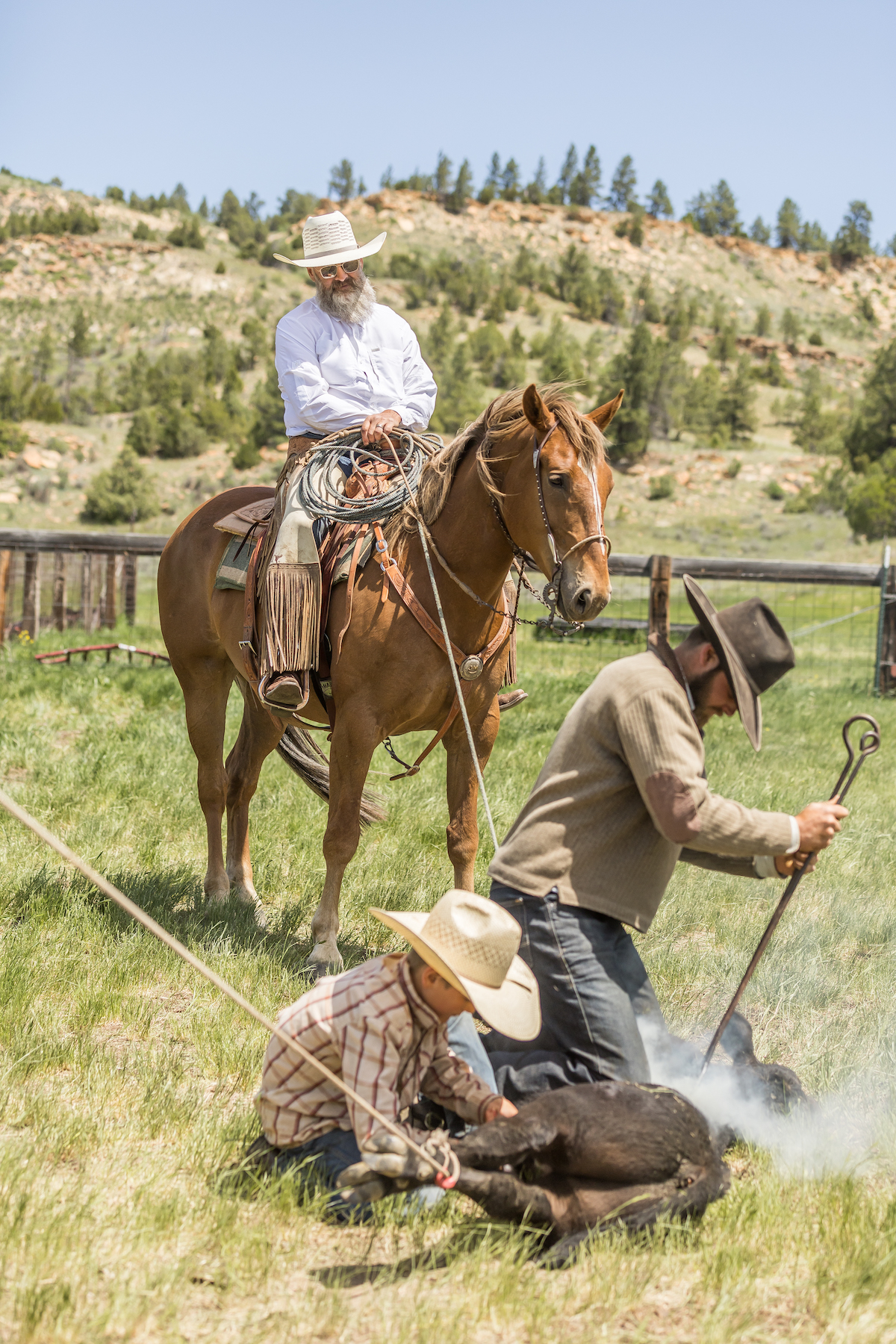
Generationally speaking, the world is changing. There are less than 2 million farmers and ranchers in the United States, and yet they produce 80 to 90% of the nation’s food and fiber. This pressure combines with factors like geographical access to resources, financial disparities and societal reluctance to seek help and contributes to the cowboy and ranching outlook on mental health.
Much in the same way Justin Reichert and Nicole Grady created The Outside Circle Show to fulfill the lack of representation, most within the cowboy community don’t feel that those outside of their lifestyle can understand their struggles. With Reichert and Morris leading the charge through their organizations, not only is perception of the topic becoming more acceptable, but access to resources is increasing as well.
“We don’t really have a whole lot of resources for folks who are in chronic pain — getting bucked off and living a hard life. So, drinking comes as a coping mechanism,” says Kadie Zeller, Scott and Andrea’s daughter. “That door is really opening for these younger people to realize that you can be successful and you can be a good cowboy, and you can go to these bars and not drink. [You can do] all these things that are a part of the experience without having to degrade your mental health.
“I do think the missing piece is that addiction is never the problem,” she continues. “It’s a symptom. And the symptom is generally something going on inside, and they’ve never been given the resources and tools and talked about how to cope with that.”
Britton Collum, an accredited life coach with Wild Courage, says many of the clients he’s worked with are harboring trauma or biases that prevent them from properly processing emotion.
“[We’ve given justification in the] cowboy culture that the only way you can really be a cowboy is that you have to dissociate,” Collum says. “I think by and large people are going to reproduce what they’re exposed to, and all it’s highlighting is that the mass majority of the culture is emotionally immature.”
Jeremy Morris, who has served as a panelists for the Outside Circle Show’s mental health panels held in Elko, Nevada, since 2023, recalls the struggles of sobriety. For him, it was not necessarily getting sober, but rather dealing with the emotional damage of his traumatic childhood.
“When you decide to do something about getting sober, that doesn’t mean your life is going to get easier, because now you’re going to have to deal with all the reasons you drink in the first place, and that’s why it’s hard to get sober and it’s hard to stay sober,” Morris says. “You can’t anesthetize that pain anymore.
“The scariest thing imaginable was to let somebody in to all those hurt and broken places of my life that kept me on the run,” Morris continues. “That started the healing journey.”
Because of Morris’ personal experience with sobriety and counseling, he’s been able to guide his nonprofit Wild Courage and corresponding podcast in a way that speaks to others in similar situations.
“We have all these toxic behaviors that come out of all this pain that’s trapped inside,” Morris says. “I think at some level, we all feel like we’re alone in whatever it is we’re going through, and there’s something very hopeful and validating about hearing somebody verbalize something you’re experiencing that you thought you were the only one on the planet who was going through it. It’s validating to your pain, but also it’s hopeful, like, ‘Wow, that guy made it through it. Maybe I can.’”
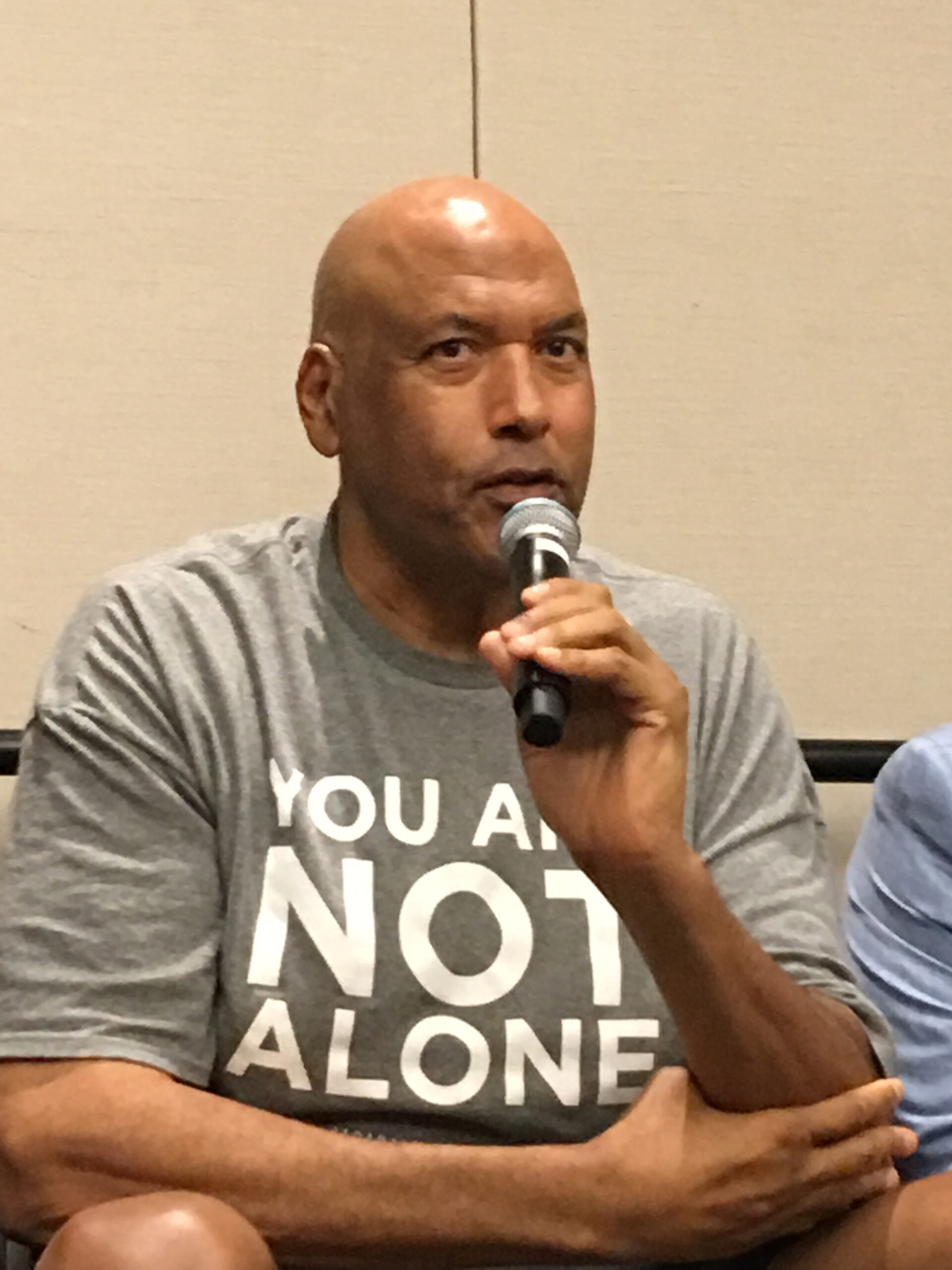
#James Donaldson notes: Welcome to the “next chapter” of my life… being a voice and an advocate for #mentalhealthawarenessandsuicideprevention, especially pertaining to our younger generation of students and student-athletes. Getting men to speak up and reach out for help and assistance is one of my passions. Us men need to not suffer in silence or drown our sorrows in alcohol, hang out at bars and strip joints, or get involved with drug use. Having gone through a recent bout of #depression and #suicidalthoughts myself, I realize now, that I can make a huge difference in the lives of so many by sharing my story, and by sharing various resources I come across as I work in this space.#http://bit.ly/JamesMentalHealthArticle Find out more about the work I do on my 501c3 non-profit foundation website www.yourgiftoflife.org Order your copy of James Donaldson’s latest book, #CelebratingYourGiftofLife: From The Verge of Suicide to a Life of Purpose and Joy
While pushback is inevitable in any new venture, and especially one of controversy, those who feel called to this cause won’t be halted by negativity. Reichert admits their mission with the Outside Circle Show’s mental health panel wasn’t met with 100% support; some were both skeptical and averse to making waves within the community.
“The first year was rough. We didn’t know what it was going to be or how it was going to be perceived. Even this year, there were guys standing out in the hall laughing,” Reichert says. “But, if we can preserve some of the cowboy culture and keep it authentic and keep it real in the day and age of social media, I think that’s worthwhile. And, if we can do any good in the mental health community, if we help one person, it’d be worth it. I guess I can’t really let what people think of us stop us.”
Ultimately, in a world often caught up in the ego and pride of what it means to be cowboy, this group of men and women are breaking barriers. The cornerstone of their cause is love for their fellow cowboy, and it has created a safe space for their peers to gather and open their hearts to a new way of thinking and living.
“What if we had the courage to be seen and heard? To tell our stories that we thought we’d take to the grave?” Morris asks. “We create this narrative that if you really knew what’s happened to me or what I’ve done, I will be unaccepted and judged. We’ve learned that through our society and the shame that comes with some of these stories. But I’ve found that shame and vulnerability can’t coexist. These beautiful things start happening with men when they have a chance to be vulnerable and have a safe place to tell their story.”
Addiction rears its head in many ways. Some struggle with substance abuse while others are consumed with work, food or any number of vices. It’s a chronic, compulsive, physiological or psychological need for a habit-forming substance, behavior or activity that ultimately results in having a harmful effect on one’s life. But there’s light at the end of the tunnel.
“Life is so incredibly beautiful when you’re not looking through the haze of addiction,” Morris says. “I’m not saying it’s easy, but it’s worth it. And you’re worth it.”