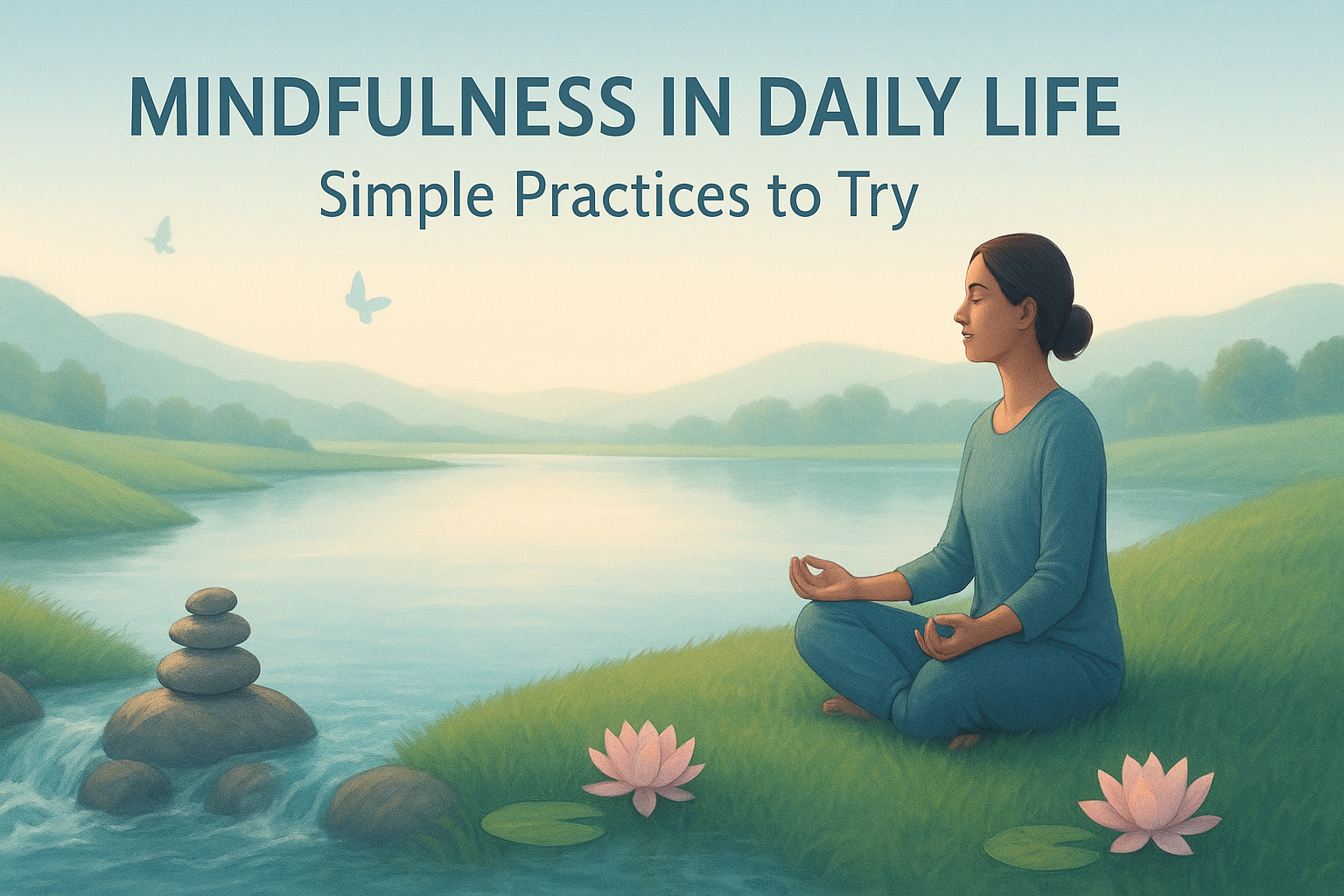
Mindfulness in Daily Life: Simple Practices to Try
In today’s fast-paced world, finding moments of peace and clarity can often feel like an elusive goal. However, by integrating mindfulness into your daily routine, you can cultivate a sense of calm and presence, no matter how busy your life may be. This blog post will guide you through simple mindfulness practices that you can incorporate into your daily life, helping you to live more in the moment and reduce stress.
Table of Contents
1. Introduction to Mindfulness
2. The Benefits of Mindfulness
3. Simple Mindfulness Practices
4. Tips for Successful Mindfulness Practice
5. Conclusion
6. FAQs
Introduction to Mindfulness
Mindfulness is the practice of being fully present and engaged in the moment, aware of your thoughts and feelings without distraction or judgment. Originating from ancient meditation practices, mindfulness has gained popularity in modern times as a powerful tool to enhance mental well-being.
Contrary to popular belief, mindfulness doesn’t require hours of meditation or special training. It’s about finding simple ways to bring awareness to your everyday activities. Whether you’re washing dishes, commuting, or even eating, mindfulness can be applied to any part of your day.

The Benefits of Mindfulness
Practicing mindfulness regularly can lead to numerous benefits, including:
1. Reduced Stress: Mindfulness helps break the cycle of stress by promoting a state of relaxation and calm.
2. Improved Focus: By training your mind to focus on the present moment, mindfulness enhances concentration and clarity.
3. Better Emotional Health: Mindfulness can help you manage emotions more effectively, leading to improved mood and mental health.
4. Enhanced Relationships: Being present and attentive can improve communication and deepen connections with others.
Simple Mindfulness Practices
Mindful Breathing
Start with something as simple as mindful breathing. Take a few moments each day to focus on your breath. Notice the sensation of the air entering and leaving your nostrils. If your mind wanders, gently bring it back to your breath. This practice can be done anywhere, anytime, making it a versatile tool for finding calm.
Mindful Eating
Turn your meals into a mindfulness practice by engaging your senses. Pay attention to the colors, smells, and textures of your food. Chew slowly and savor each bite. This not only enhances your dining experience but also aids digestion and promotes healthier eating habits.
Body Scan Meditation
The body scan is a mindfulness exercise that involves paying attention to different parts of your body, from head to toe. Lie down comfortably, close your eyes, and slowly direct your attention to each part of your body, noticing any sensations or tension. This practice helps you connect with your body and release stress.
Gratitude Practice
At the end of each day, take a moment to reflect on three things you are grateful for. This practice shifts your focus from what’s lacking to what you have, cultivating a sense of appreciation and positivity.
Tips for Successful Mindfulness Practice
Here are some tips to help you integrate mindfulness into your daily routine:
1. Start Small: Begin with just a few minutes a day and gradually increase the time as you become more comfortable with the practice.
2. Be Consistent: Try to practice mindfulness at the same time every day to establish a routine.
3. Be Patient: Mindfulness is a skill that takes time to develop. Be patient with yourself and avoid self-criticism.
4. Find What Works for You: Experiment with different practices to find what resonates best with you. Mindfulness is a personal journey, and what works for one person may not work for another.
Conclusion
Incorporating mindfulness into your daily life is a journey worth embarking on. By practicing mindfulness, you can cultivate a greater sense of peace, improve your mental health, and enhance your overall quality of life. Remember, the key to mindfulness is to be present and aware, embracing each moment as it comes.
FAQs
Q: Can I practice mindfulness without meditation?
A: Absolutely! Mindfulness is about being present in the moment, which can be practiced through daily activities such as walking, eating, or even brushing your teeth.
Q: How long does it take to see the benefits of mindfulness?
A: Some people may notice benefits almost immediately, while for others, it may take a few weeks of consistent practice. The key is to be patient and persistent.
Q: Is mindfulness suitable for everyone?
A: Yes, mindfulness is a versatile practice that can be adapted to suit individuals of all ages and backgrounds. It’s about finding the right approach that works for you.
Q: Can mindfulness help with anxiety?
A: Mindfulness can be an effective tool for managing anxiety. By focusing on the present moment, it can reduce the rumination and worry that often accompany anxiety.