7 min read
Harvard researchers and a journalist who lost her husband to suicide share what science and lived experience teach us about grief, trauma, and the long road back to resilience.
Grief is something I know personally. I have lost coaches who were like fathers to me. I have lost friends. I have watched people I love struggle with losses that seemed unsurvivable. And I have been in my own darkness — a place where the pain felt like it would never lift. So when Harvard T.H. Chan School of Public Health hosted a panel on the toll of grief, loss, and trauma, I paid close attention.
Rachel Zimmerman, a journalist whose husband — MIT robotics professor Seth Teller — died by suicide in 2014, opened the conversation with words that stayed with me. 'The book is really about this arc from believing that your life is over, and you'll never be able to rebuild your family, to coming to some semblance of resurgence and thinking that you can go on — because that is our human impulse, to go on.' Her children were eight and eleven at the time. Today, they have relationships, jobs, and passions. She never could have imagined any of that in those early days.
Matthew Nock, a professor of psychology at Harvard, reminded the audience that despite what popular culture tells us about the stages of grief, everyone moves through it differently. Research from Columbia University has shown that most people, over time, are actually quite resilient after a loss or traumatic event. Some struggle for longer, and some experience what is called complicated grief — but that is a minority of cases.
Karestan Koenen, a professor of psychiatric epidemiology at Harvard Chan School, made a point that I think is profoundly important: trauma does not just live in the mind. It lives in the body. 'We don't just experience it in our mind, we experience it in our bodies,' she said. 'Grief really takes a toll on your body. You feel heavier. You feel exhausted.' This is why approaches that work with the body — yoga, meditation, breathwork — can be as effective as traditional talk therapy for some people dealing with trauma.
Koenen also emphasized that community support is one of the biggest predictors of how people do over time. Family, friends, schools, religious institutions — the people who show up matter enormously. Nock cited a remarkable 2001 study that found people who had been hospitalized for suicide risk and then received hand-signed postcards from a healthcare worker expressing care and concern had a significantly lower risk of suicide death than those who did not. Something as simple as a postcard. Someone saying: I see you. I care about you. I want to stay in contact.
I think about that study often. Because it confirms what I have always believed: connection saves lives. Not grand gestures — just showing up. Calling. Checking in. Letting someone know they are not invisible.
Nock also noted that healthy habits play an important role in healing from grief and trauma. Decades of research show that good diet, regular aerobic exercise, and consistent sleep have strong antidepressant and anti-anxiety effects. These are not cures, but they are powerful tools — and they are available to all of us.
If you are carrying grief right now — whether from a recent loss or one that happened years ago — please know that what you are feeling is real, and it is valid, and it does not mean you are broken. It means you loved someone. And healing is possible. It may not look the way you expect. It may take longer than you think. But the human impulse to go on is real. I have felt it. I have lived it.
If you are struggling with grief, trauma, or thoughts of suicide, please reach out for help. Talk to a doctor, a counselor, or someone you trust. And if you are in crisis, call or text 988 to reach the Suicide and Crisis Lifeline, available 24 hours a day. You do not have to carry this alone.
From the Author
Order today and James will personally sign your copy — a meaningful keepsake from an NBA All-Star and mental health advocate.
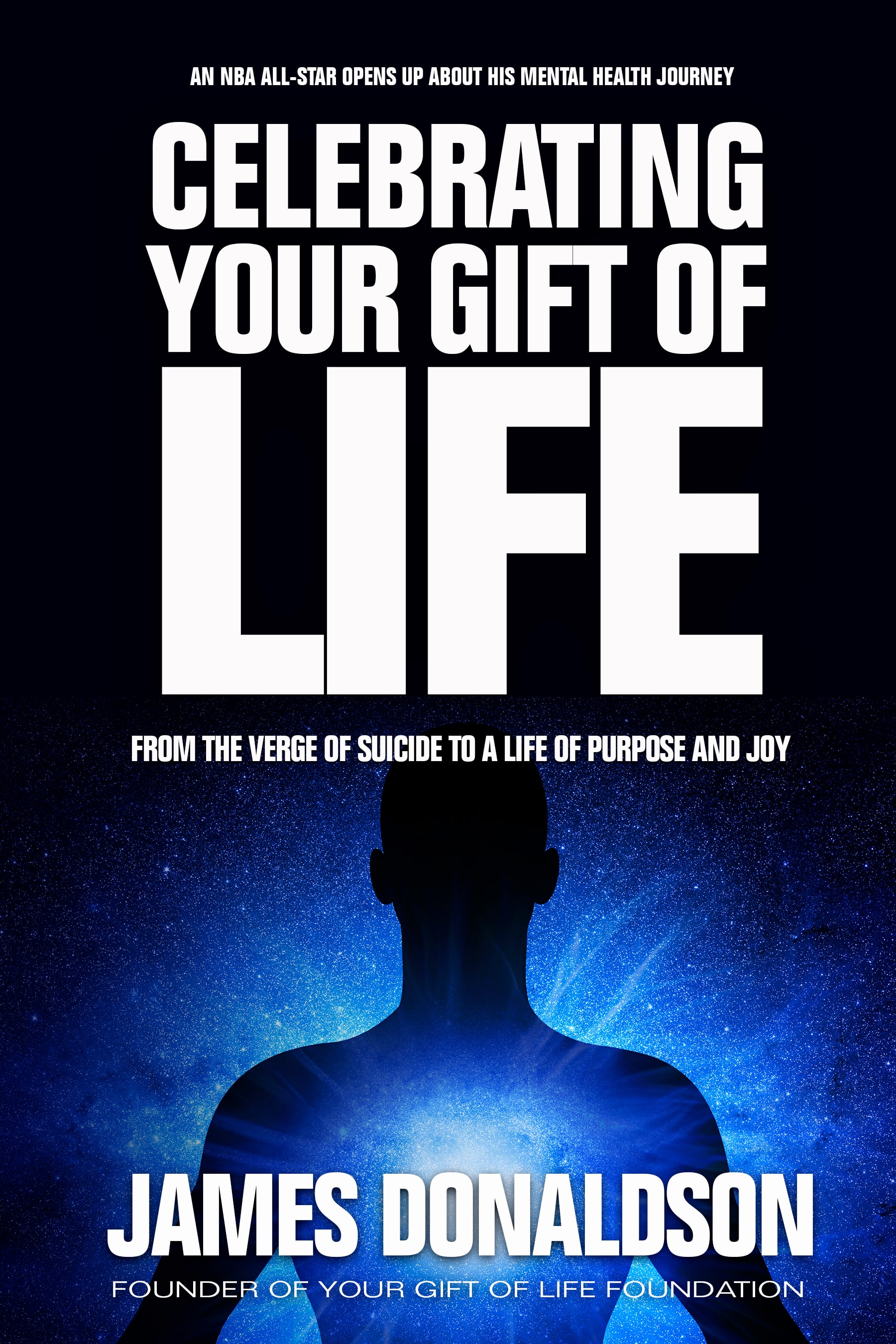
Celebrating Your Gift of Life
From the verge of suicide to a life of purpose and joy
Order & Get It Signed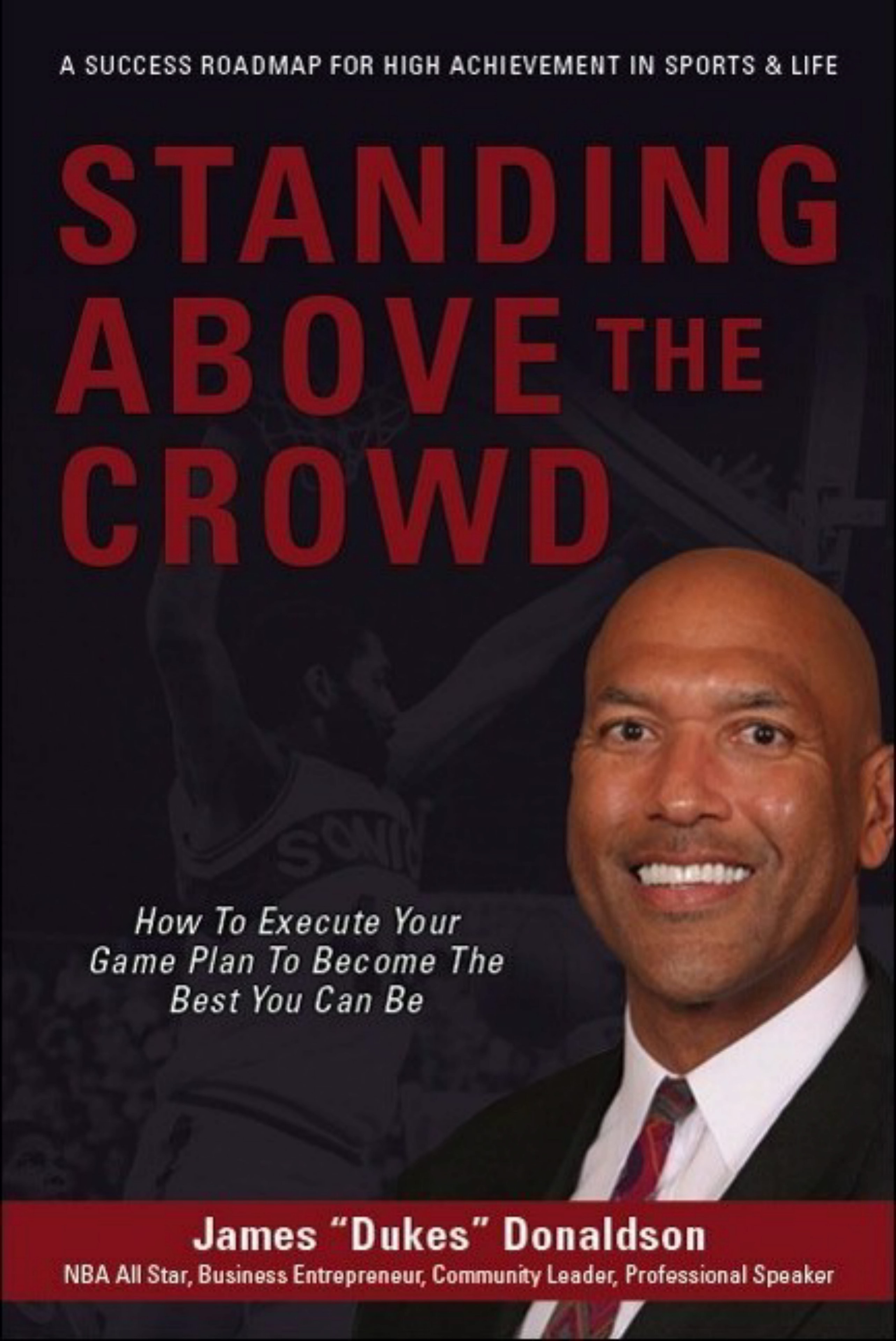
Standing Above the Crowd
Inspiring stories of resilience, hope, and mental wellness
Order & Get It Signed
James Donaldson
Author, Speaker & Mental Health Advocate · Standing Above the Crowd
James Donaldson is a former NBA All-Star (1988, Dallas Mavericks) who played 20 years of professional basketball with the Seattle SuperSonics, L.A. Clippers, Dallas Mavericks, New York Knicks, Utah Jazz, and teams across Europe, before touring with the Harlem Globetrotters. A Washington State University graduate inducted into both the Pac-10 and WSU Athletic Halls of Fame, James went on to found The Donaldson Clinic, an outpatient physical therapy practice he operated for nearly three decades. Today he devotes his time to mental health awareness and suicide prevention — speaking to organizations, schools, and youth groups — and is the author of Standing Above the Crowd and Celebrating Your Gift of Life (2021). James recently relocated to the Dallas, TX area and believes deeply in being a role model of success and professionalism for the young people he serves.